




I’ve written hundreds of gear reviews and edited hundreds more, which means I’ve spent a strange amount of my adult life thinking about hiking shoes, sleeping bags, rain ponchos, backpacks, sandals, GPS watches, trekking poles, and other things people buy because they want to be more comfortable outside.
After writing and reading so many reviews, you start to notice a pattern. Most gear reviews are much longer than the truly useful part of the review.
What To Look For When Reading Outdoor Gear Reviews
The fact that reviews contain some fluff doesn’t mean all the extra information is worthless. Specs matter. Price matters. Testing context matters. It helps to know whether a backpack was carried around the block or hauled up a real trail, and it helps to know whether a shoe was tested for two miles or two months. Still, if you’re trying to decide whether a piece of gear is worth your money, there are usually two things that matter more than everything else.
- What does the reviewer say is unique about the product?
- What does the reviewer say is a problem with it?
That’s the good stuff. The rest may be helpful context, but it can also become background noise pretty quickly.
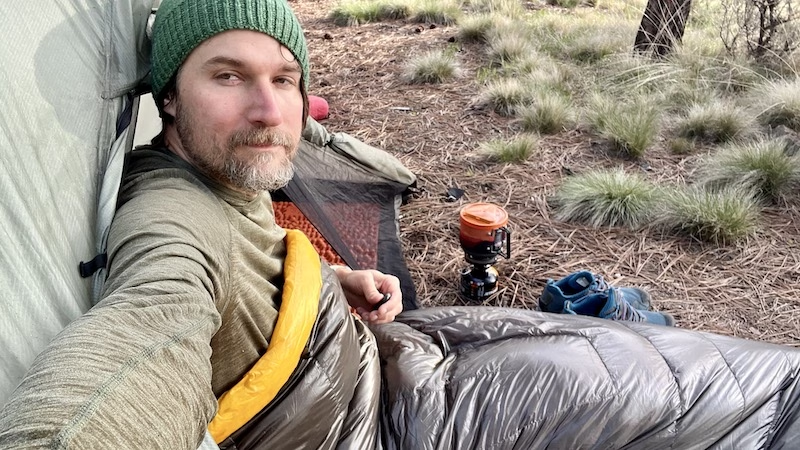
Arthur McMahon testing an Enlightened Equipment Enigma sleeping quilt in the high desert.
The reason this works is that most outdoor gear from reputable brands is fairly good these days. Not perfect, not always worth the price, and definitely not right for everyone, but good enough that “is this good?” is often the least interesting question you can ask. If you buy a $100 pair of trekking poles from a quality brand, they’ll probably do trekking pole things about as well as another $100 pair from a similar brand. If you buy a $300 lightweight backpack, there’s a decent chance it will share a lot of traits with the other $300 lightweight backpacks you’re comparing it against — same general weight range, same general feature set, same general promise that this one will somehow make your next trip better.
Maybe it will. But how can you tell?
Every piece of gear should have some reason to exist. Maybe it’s unusually light for the price, warmer than expected, has a fit that works especially well for wide feet, or maybe it carries heavy loads better than other packs in its weight class. Could even be that it has a clever little feature that sounds gimmicky on paper but actually makes your life easier in use.
That’s the part I want a review to identify. Not just that the product is “comfortable,” “well-made,” “durable,” or “versatile,” because those words get thrown around so often that they start to lose meaning. Comfortable how? Durable where? Versatile for whom? A comfortable walking shoe for errands may not be comfortable after ten miles. A durable hiking sandal may still have one annoying strap that ruins the experience. A versatile backpack may be great for weekend trips and mediocre for anything heavier.
An Example with Danner Joseph Sandals
I reviewed a pair of Danner sandals a while back that are a good example of this. On the surface, they looked like nice casual outdoor sandals. They had quality leather straps, a grippy Vibram footbed, and a style that worked around town without looking too much like something you’d wear while guiding a commercial rafting trip. They were good sandals in a general sense, but that alone didn’t make them especially interesting. Plenty of sandals are good.
The unique feature was the magnetic metal Fidlock closure. It made the sandals very easy to put on and take off, and it was genuinely satisfying to use. Click in, pop out, done. No fiddling around with a traditional buckle every time you step inside, leave the house, wander back from the beach, or need to shake out whatever tiny rock has decided to live under your foot. That feature gave the sandals a real reason to stand out.

Here, I am gripping the adjustable pull tab next to the magnetic metal Fidlock closure.
But the problem mattered just as much. The single pull tab that tightened the cross-foot leather straps was too short, so I couldn’t really lock the straps down as tightly as I wanted. That limited stability for longer walks, light hikes, and uneven ground. More importantly, after a mile or two, the strap would loosen enough that the leather started moving around and digging into the skin near the outside of my pinky toe.
That is exactly the kind of detail I want to know before buying something. It doesn’t make the sandals useless. If you want a good-looking pair of casual sandals for bopping around town on warm days, they may still be great. But if you want one pair of sandals for long walks, travel days, rocky beaches, and light hikes, that strap issue becomes a much bigger deal.
@arthur_mcmahonHow to read outdoor gear reviews and avoid all the fluff that gets added in for the sake of appeasing brands, PR agents, publishers, and the SEO gods. There are really only two things you need to look for in any outdoor product review.♬ original sound – Arthur McMahon🌲Outdoor Writer
Same product, different use case, different recommendation.
That’s what good gear reviews should help people understand. Not whether a product is simply good or bad, but what tradeoff comes with it. Lightweight gear can be expensive or fragile. Budget gear can be bulky. Cushioned shoes can feel unstable. Supportive shoes can feel stiff. Waterproof jackets can get clammy. Minimalist backpacks can look clean and simple until you realize you miss all the pockets you thought you didn’t need.
None of those tradeoffs automatically make a product bad. They just make it real.
Know That Nearly All Gear Reviews Are Bought and Paid For
This is also why I pay close attention when a reviewer says something negative, even if it’s only a short sentence buried in an otherwise positive review. Gear reviews exist inside an ecosystem where brands want good coverage, PR reps want products shown in a positive light, publications want clicks, and affiliate links are often part of the business model. That doesn’t mean the review is dishonest, and it doesn’t mean the reviewer isn’t doing good work. But it does mean praise is easy to publish.
Specific criticism is usually more valuable because it had to survive the whole process. If a reviewer mentions rubbing, leaking, loosening, poor traction, awkward pocket placement, overheating, weird fit, or any other specific annoyance, that issue probably bothered them enough to make it into the final review. Pay attention to that.
Then decide whether it matters to you. A bulky sleeping bag might be a problem for backpacking but totally fine for car camping. A shoe that lacks support after ten miles might be a poor choice for long travel days but perfectly fine for daily walks. A Frogg Toggs rain suit may look ridiculous and still be the best thing in your pack during sustained rain. Looking cool is nice. Staying dry is usually better.
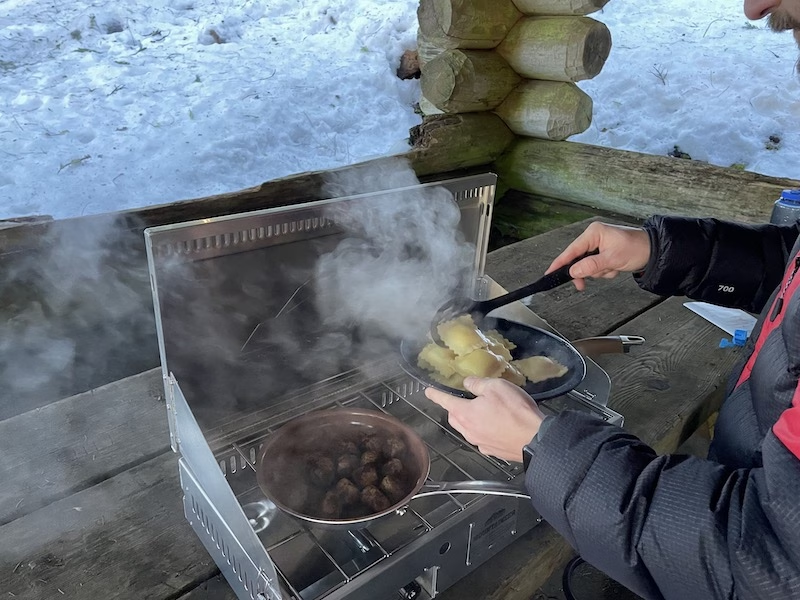
The trick is not to find flawless gear, because flawless gear mostly doesn’t exist. The trick is to find gear with tradeoffs that match the way you actually hike, run, camp, travel, or walk around outside pretending you don’t need another jacket.
So the next time you read an outdoor gear review, skim past the generic praise and look for the two things that matter most. Find what makes the product different. Then find what the reviewer disliked.
That’s usually where the real buying advice starts. Gather that info, then use it to make your own purchasing decisions.


