




Lems Waterproof Boulder Boot Long-Term Review: Years of Testing
The Waterproof Boulder Boot has become one of those pieces of footwear I keep reaching for because it works for almost everything I normally do in a boot.
I’ve owned some version of the Lems Boulder Boot for a surprisingly large chunk of my outdoor-writing career.
Years ago, I reviewed the original, non-waterproof Boulder Boot for Backpackers.com. I liked it then for many of the same reasons I still like the boot today: it was unusually light, comfortable, zero drop, roomy through the toes, and versatile enough to move from city streets to an easy hiking trail without feeling particularly out of place in either setting. My original review also identified one weakness that became increasingly obvious as I took the boot onto wetter and rougher trails—the shallow outsole didn’t offer much bite on slick surfaces.
The pair I’m reviewing here came later. These are an older generation of the Lems Waterproof Boulder Boot, not the newer Boulder Boot Grip Waterproof currently sold by Lems. That’s an important distinction because my boots still use the lightweight injection-blown rubber outsole associated with the traditional Boulder Boot rather than the redesigned rubber Grip outsole. Lems has since discontinued this version.
I’ve had plenty of time to get to know them.
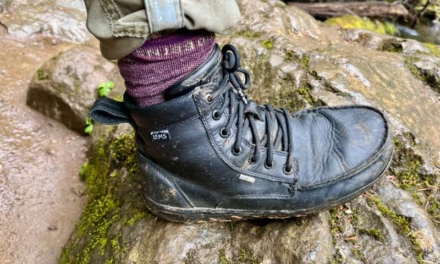
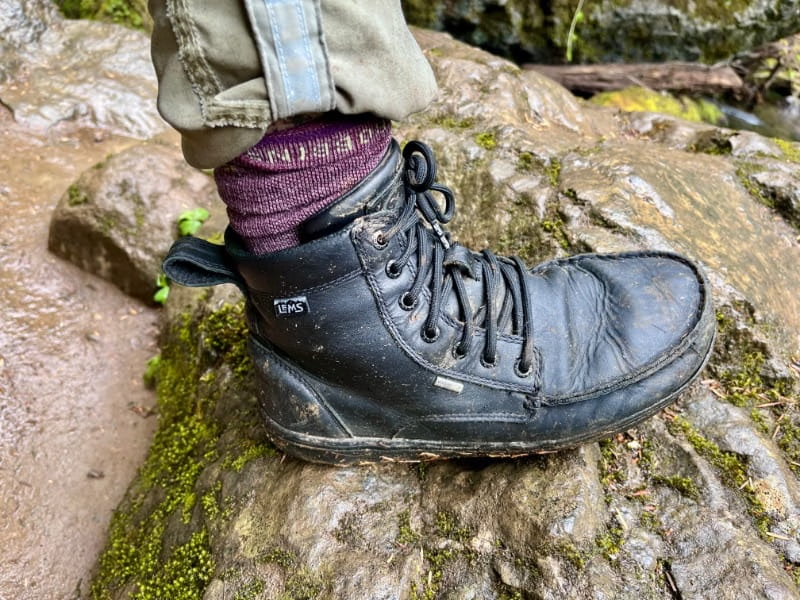
They’ve been worn around town, through Pacific Northwest rain, and across enough wet trails that the leather now has the creases, scratches, dirt, and general lack of showroom shine that I prefer to see on a long-term review sample. The basic conclusion after all that use is pretty close to the conclusion I reached years ago with my first Boulder Boots.
This is still one of my favorite all-purpose zero-drop boots.
The waterproof version simply makes considerably more sense for where I live.
Lems Waterproof Boulder Boot Review
Tested & Reviewed
Here’s what I think…
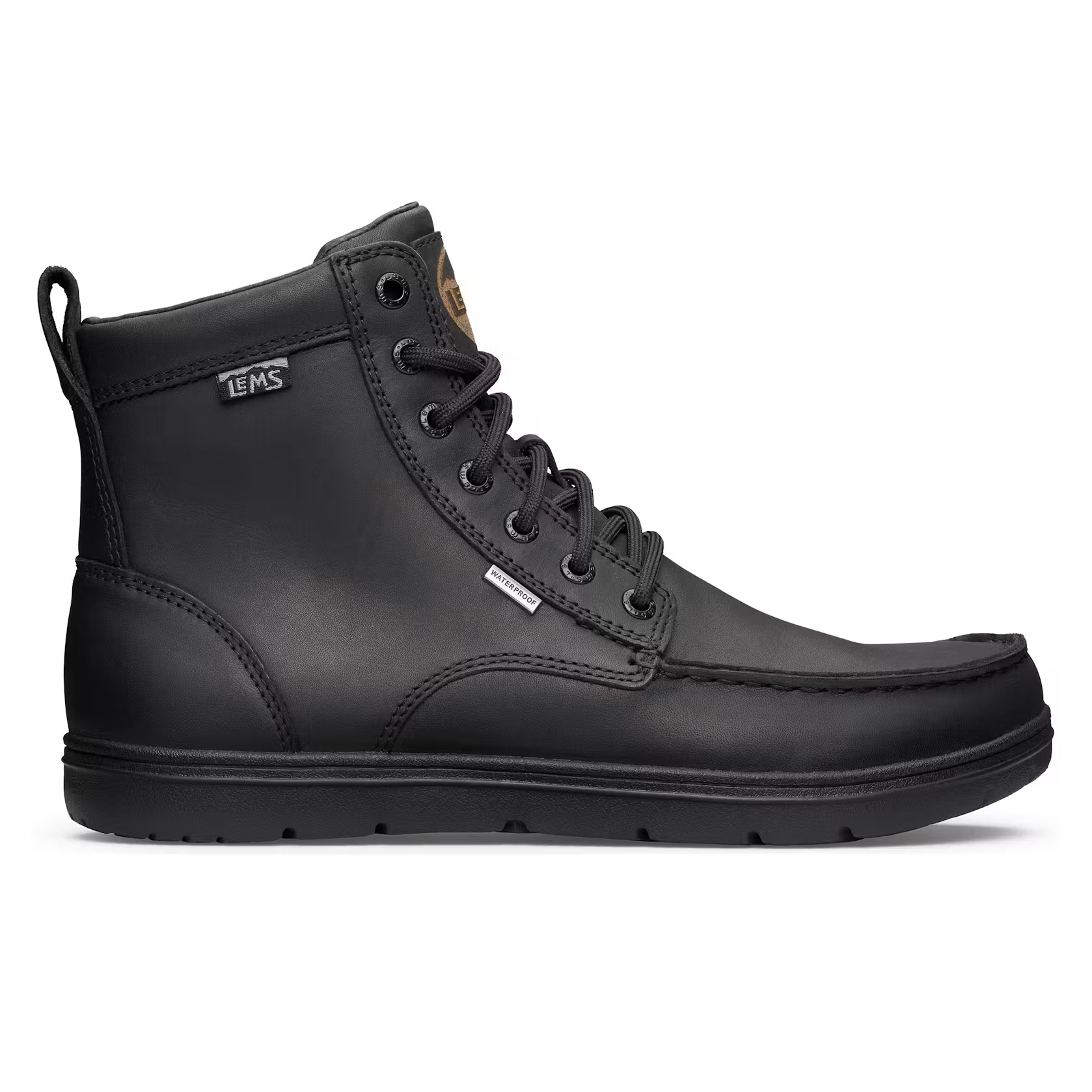
The Lems Waterproof Boulder Boot is a comfortable, lightweight, and unusually versatile zero-drop leather boot. The wide toe box and flexible construction make it excellent for walking, travel, everyday wear, and moderate hiking, while the waterproof membrane gives it a real advantage in wet climates.
- Design and Quality Score 90%
- Walking Score 95%
- Hiking Score 65%
- Travel Score 85%
- Versatility Score 90%
Overall Recommendation
It’s comfortable around town, great for casual walks, capable on mild trails, and waterproof enough for the persistently damp weather.
Astral Designs Loyak AC Pros and Cons
Reasons To Buy
Wide toe box gives feet plenty of room
- Zero-drop platform feels natural if you’re accustomed to minimalist footwear
- Waterproof leather works well for rainy climates
- Works equally well for everyday wear, travel, and moderate hiking
Reasons To Skip
Shallow outsole isn’t great on slick rock, mud, or more technical trails
Zero-drop footwear may require an adjustment period
Waterproof construction can be warmer than necessary in dry summer weather
I’ve worn multiple Lems Boulder Boots over the years. The durability. comfort, and versatility keep me a return customer.
I’ve Been Wearing Boulder Boots for Years
My history with these boots goes back farther than this particular pair.
When I reviewed the original Boulder Boot years ago, I was immediately struck by how little it felt like the hiking boots I had been wearing up to that point. The original model weighed only about five ounces per shoe, folded down ridiculously small, and had enough flexibility that I described wearing them as something closer to a pair of slippers than conventional outdoor boots.
That first pair wasn’t waterproof, although it proved surprisingly water resistant. I wore it during a wet Pacific Northwest winter and took it onto muddy Cascade foothill trails without much trouble. At the time, Lems already offered a separate waterproof version, and eventually I ended up with that version too.
The waterproof model kept the core ingredients that made the regular Boulder Boot appealing while swapping the mixed-material upper for full-grain oiled leather and adding a waterproof membrane and gusseted tongue. The Lems men’s Waterproof Boulder Boot has a 10-millimeter stack height, zero-drop platform, Wide Natural-Shape fit, and injection-blown rubber outsole.
That last part matters because it’s both one of the boot’s strengths and its biggest weakness.
More on that shortly.

The waterproof model is my preferred Boulder Boot for the PNW.
Comfort Is Still the Boulder Boot’s Best Feature
The first thing I liked about the Boulder Boot years ago is still probably the first thing I’d mention to somebody trying one today.
It doesn’t squeeze my feet.
Lems builds the Boulder Boot around a much wider, more foot-shaped front than you’ll find on many traditional boots. Instead of narrowing aggressively toward the toes, the boot gives them room to spread out. After several hours of walking, that extra space becomes much more noticeable than it is during a two-minute try-on at home.
I’ve always had fairly blister-prone feet, and the Boulder Boot shape has treated them well. In my original review, I noted that I could walk around all day without developing hotspots, and that has remained one of the defining characteristics of the boot for me.
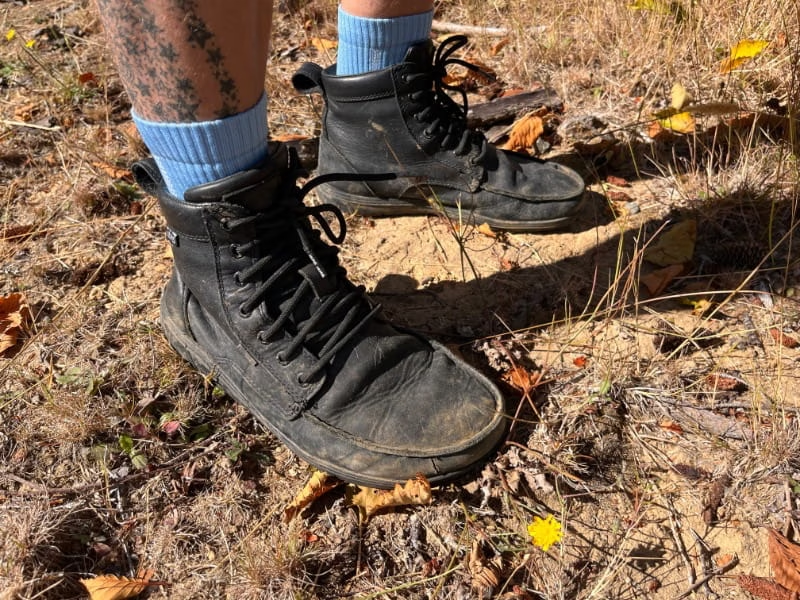
The wide toe box helps keeps my toes blister free.
The waterproof leather version is naturally more substantial than that original nylon model, but it still doesn’t feel stiff or overly structured. The leather has softened and creased with age, and at this point my pair bends with my feet rather than making my feet bend around the boot.
That’s exactly how I want an old leather boot to look and feel.
The Leather Ages Well
One advantage of doing a long-term review instead of a fresh-out-of-the-box review is that I don’t have to speculate about durability.
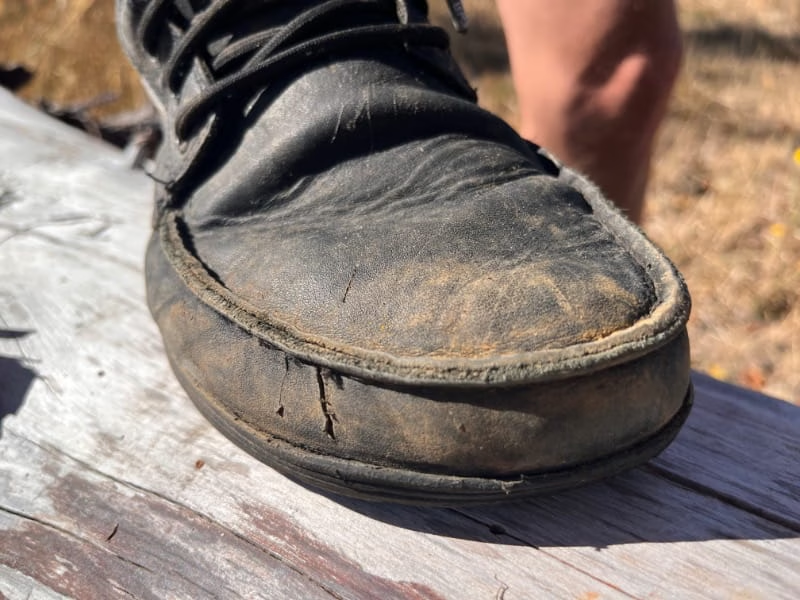
The leather is creased. There are scuffs around the toes and sides. Dirt has worked its way into the little folds and seams, and the pristine finish disappeared a long time ago.
Good leather footwear should be allowed to age. I don’t want a pair of hiking boots that needs to remain cosmetically perfect to look good, because I have absolutely no intention of helping them accomplish that goal. More importantly, the aging has been mostly cosmetic. The leather construction has proven durable enough for the walking, wet-weather use, and moderate hiking I’ve put it through.
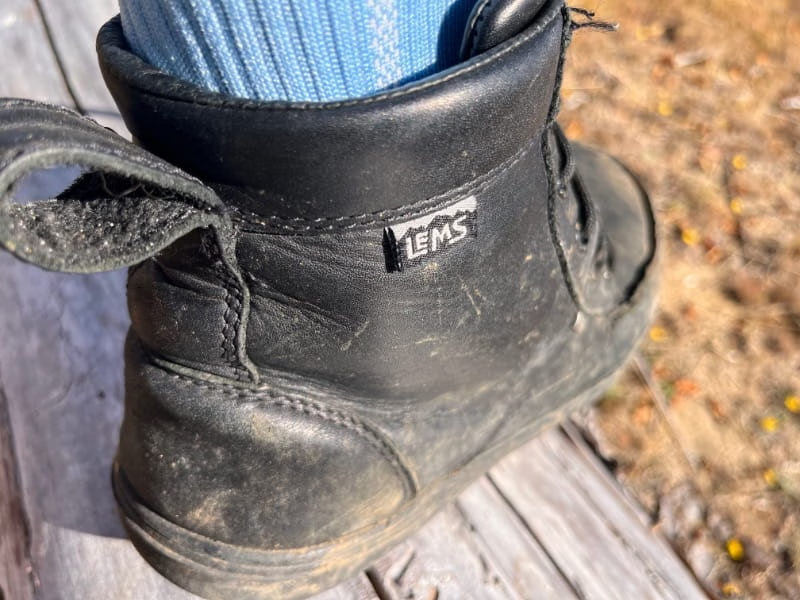
Lems boots wear well — the leather ones even moreso.
Lems reinforced this waterproof generation compared with its lighter Boulder Boots, using full-grain leather and a more substantial outer construction while still keeping the shoe relatively lightweight.
That balance is one of the reasons I’ve continued wearing them. They feel like real boots without turning into bricks.
Excellent Walking and Travel Boots
If you handed me these boots and told me I could only use them for one activity, I’d choose walking.
The lightweight outsole flexes easily, the zero-drop geometry feels natural to me, and the toe box provides enough room that I can wear them for hours without feeling like my feet are slowly being compressed into a different shape.
This is one area where the old injection-blown rubber outsole works extremely well.

The Boulder Boot isn’t only meant for outdoor recreation. It also works well as an in-town boot, with a casual look that fits in on a night out.
Lems used that IBR outsole specifically because it kept the traditional Boulder Boot lightweight and flexible, and the company has described it as particularly suited to travel and running around town.
On sidewalks, airport floors, packed dirt, gravel paths, and other predictable surfaces, I really like this sole. It contributes to the slipper-like feel I’ve associated with Boulder Boots since my first pair.
A traditional hiking boot often reminds you that you’re wearing a hiking boot once you get off the trail. The Boulder Boot is happy wandering through a grocery store, restaurant, hotel lobby, airport terminal, or downtown neighborhood afterward.
That’s part of its charm.
Hiking Performance Is Good—Until the Trail Gets Slick
Here’s where we arrive at the flaw.
The previous Waterproof Boulder Boot (reviewed here) uses an injection-blown rubber outsole very similar in philosophy to the outsole on the original Boulder Boot. The material is light and flexible, which is wonderful for walking and comfortable day-to-day use.
The tread just isn’t particularly aggressive.
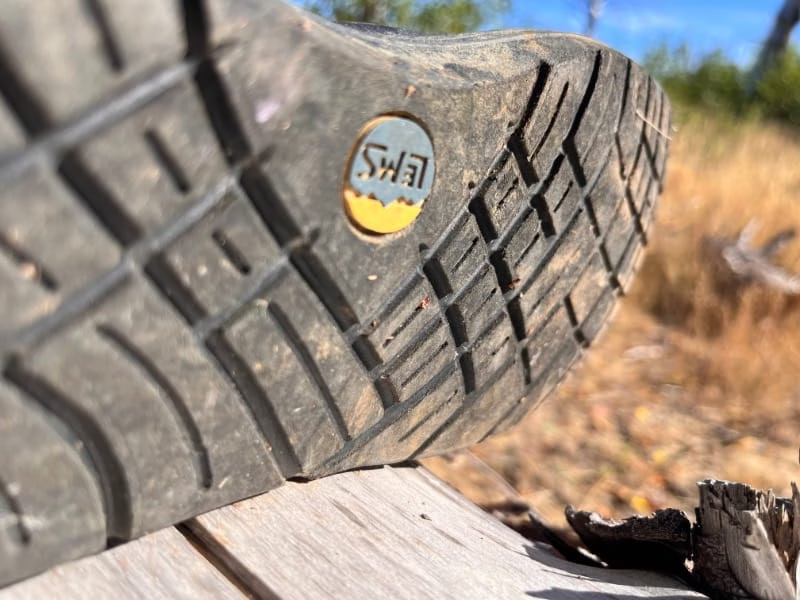
The tread isn’t aggresive, and while the blown rubber soul compresses well for travel, it doesn’t grip uneven surfaces all that well.
I noticed this the first time around. In my original Boulder Boot review, I specifically called out the shallow waffle-like tread and noted that while it worked well enough for urban use and moderate trails, it could lose traction on slick rocks and more difficult terrain.
The Waterproof Boulder Boot didn’t really solve that problem.
I’ve taken mine onto wet Pacific Northwest trails where slick rock, roots, mud, and moss can all make an appearance within a few hundred feet of one another. The boots are capable enough for ordinary hiking, but I pay considerably more attention to my footing than I would in footwear with deeper, stickier lugs.
It’s an odd mismatch when you think about it.
You have a waterproof leather boot designed for wet conditions, but the bottom of the boot is at its least convincing precisely when those conditions make the ground slippery.
I don’t think it ruins the boot. Most of my time in these isn’t spent scrambling across wet boulders, and the lightweight outsole is a big part of what makes the Boulder Boot so comfortable everywhere else.
Still, if I could have changed one thing about this version, traction would have been it.
Lems Fixed the One Thing I Wanted Fixed
This is where I have to give Lems some credit.
The old Waterproof Boulder Boot, reviewed here, has now been discontinued, and the new Boulder Boot Grip Waterproof takes the same basic idea in a more trail-friendly direction. Lems says it started with the Waterproof Boulder Boot and replaced the lightweight IBR outsole with an all-terrain, slip-resistant full-rubber outsole featuring siping grooves and textured rubber for better performance on wet and slippery surfaces.
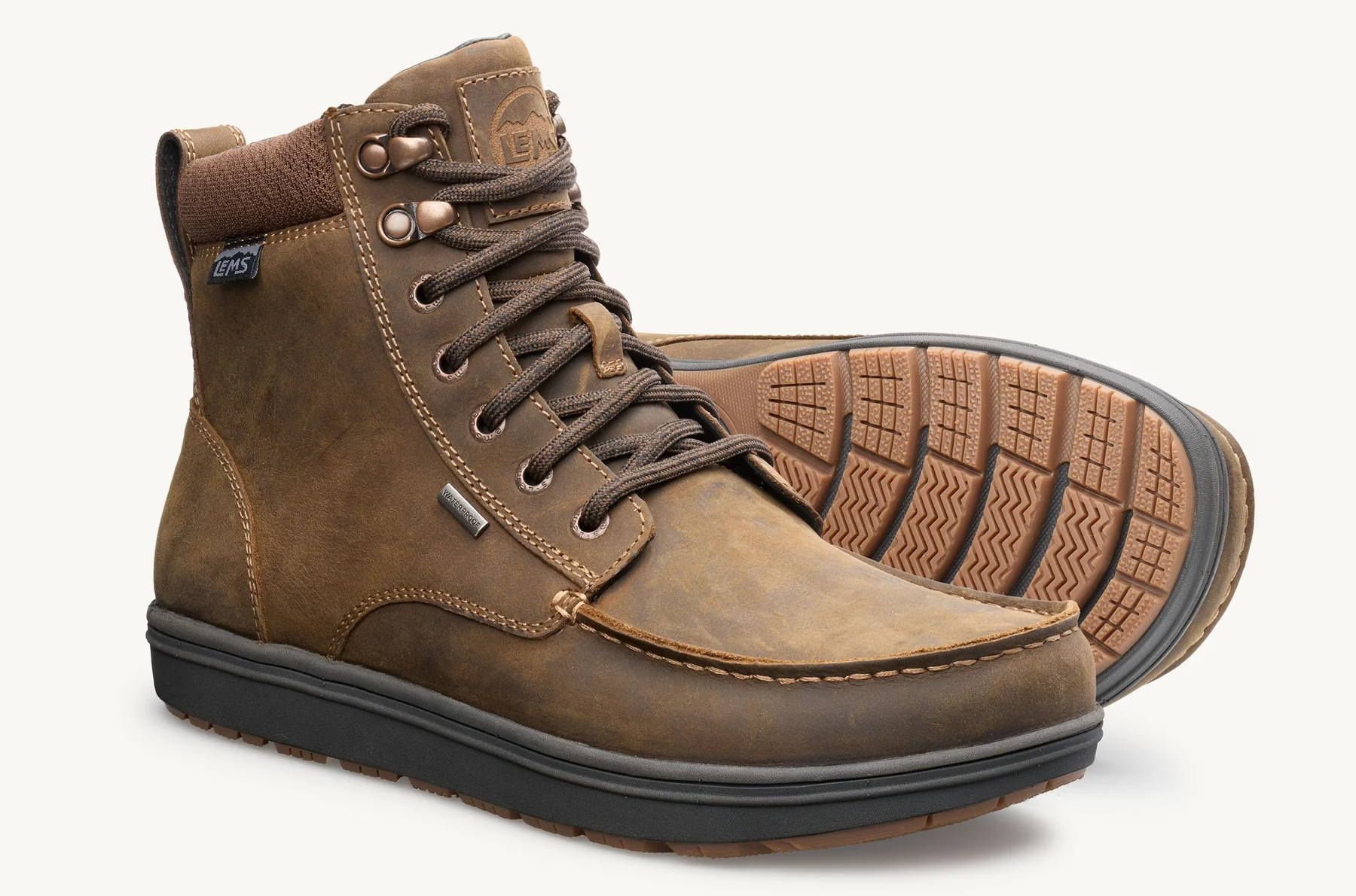
The new Lems Boulder Boot Grip Waterproof fixed the only issue I had — and I can’t wait to try them out when it’s time to order my next pair.
That’s exactly the part of my boots I would have changed.
The new Grip version is heavier and has a 13-millimeter stack rather than the old Waterproof Boulder Boot’s 10-millimeter stack, so it isn’t simply the same boot with deeper grooves carved into the bottom.
Lems added a full-rubber outsole and more cushioning, bringing the listed men’s weight to 14.1 ounces compared with 12.9 ounces for the discontinued Waterproof Boulder Boot.
I haven’t tested that newer version, so I’m not going to pretend I can tell you how it performs after hundreds of miles. But the design change makes sense.
Lems identified the exact compromise that limited the older Waterproof Boulder Boot on slippery trails and built a version intended to address it. That’s what I want manufacturers to do: keep the things that work and improve the part that doesn’t.
Pat on the back, Lems. You listened.


