


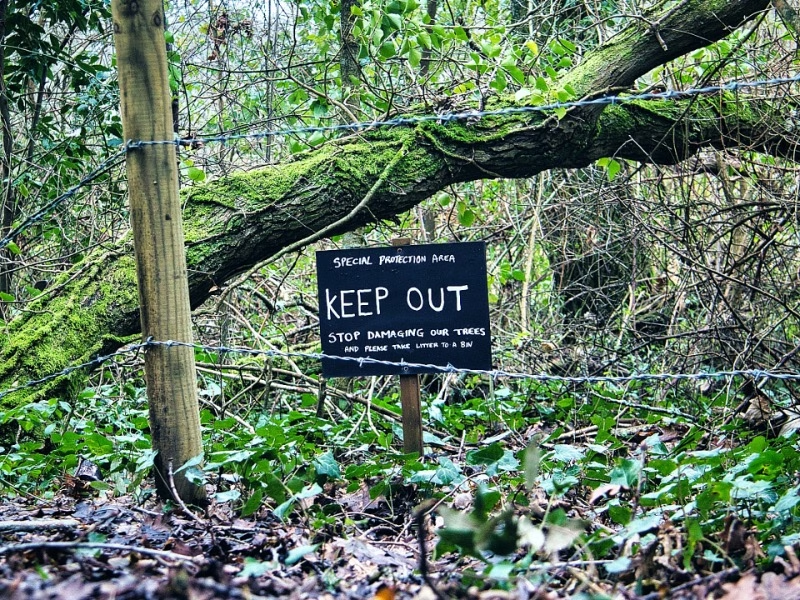
A comment popped up on one of my hiking videos recently:
“Please stay away so us Locals can enjoy it…”
It was a pretty clean distillation of something I see all the time in the outdoor world. Sometimes people are more subtle about it, and sometimes it gets dressed up in the language of conservation, but the message is basically the same: I know about this place, you don’t, and I’d prefer to keep it that way.
I’m about as firmly opposed to that attitude as you can get. Hiding the existence of a hiking trail, swimming hole, mountain range, or other public place is not the same thing as protecting it, and living closer to a public landscape doesn’t somehow give you a greater moral claim to the scenery.
There’s a much better way to protect the places we love: help other people learn how to enjoy them responsibly.
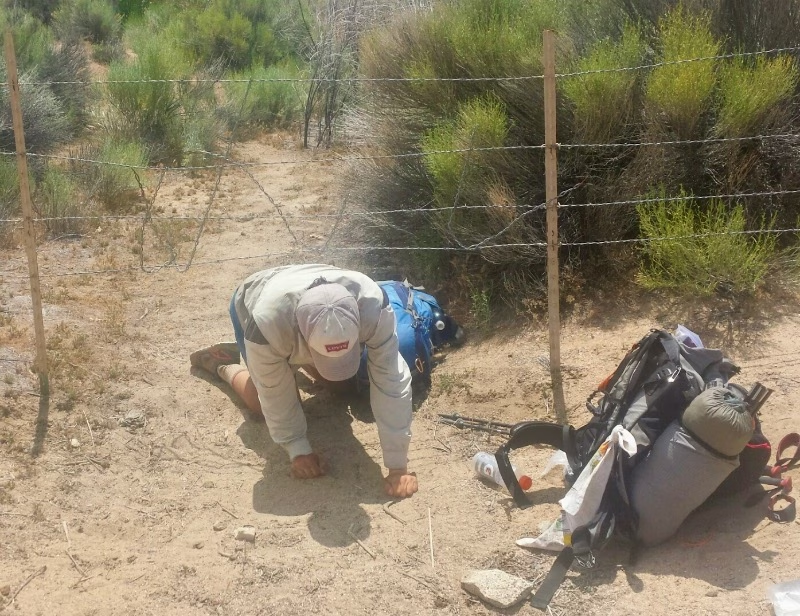
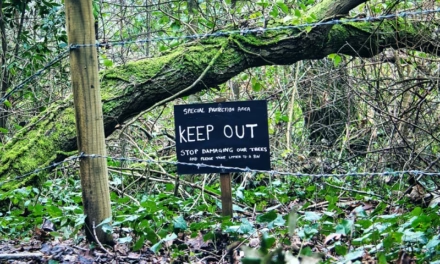
Arthur crawling under a barbed wire fence to access a public water source while backpacking in Southern California.
Quick Take
Outdoor gatekeeping is not conservation. If a place is legally open to the public, the better response to increased visitation is usually to teach people how to treat it well, not pretend it doesn’t exist. Share the trail, but share the responsibility that comes with it too.
There are obvious exceptions. Sensitive archaeological sites, wildlife habitat, unofficial routes, fragile off-trail locations, and places that land managers specifically ask people not to publicize deserve more caution. That’s stewardship. Telling people to stay away because you personally liked a trail better when fewer people knew about it is something else.
What Is Outdoor Gatekeeping?
Outdoor gatekeeping is basically the idea that certain people deserve access to outdoor places more than others. Sometimes it means refusing to tell someone the name of a perfectly established public trail. Other times it shows up as anger when a hiking spot gets more popular, complaints about “tourists” or “outsiders,” or deliberately withholding basic information because you don’t want anybody else showing up.
Social media has certainly added fuel to the argument. A beautiful place can suddenly go viral and receive far more attention than it did five or ten years ago, and I understand why that makes people nervous. Nobody wants to hike several miles into the mountains only to find garbage around a campsite, toilet paper in the bushes, or a web of new social trails cutting across a meadow.
But the problem in those situations isn’t that other people discovered the outdoors. The problem is bad outdoor behavior, and those are two very different things.
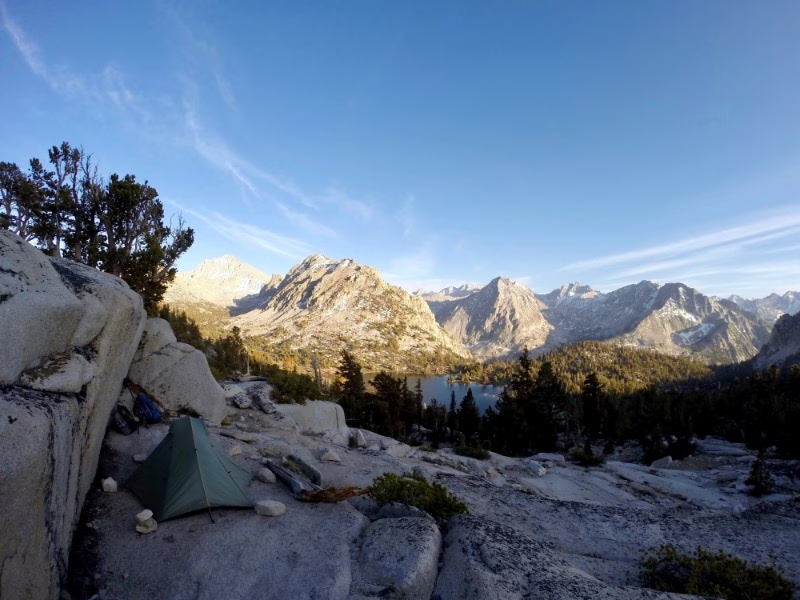
My favorite tent site. Located above Bullfrog Lake near Kearsarge Pass in the Sierra Nevada. Mt. Whitney in the background.
I Experienced Gatekeeping While I Was Backpacking in Idaho
The comment that kicked off my social media videos was similar to another experience I had while backpacking in Idaho years prior.
I was hiking a loop in the Sawtooth Mountains near Stanley, which is one of those places where it’s pretty easy to understand why people get protective. Huge mountains, clear lakes, long trails disappearing off into beautiful country. It’s spectacular.
During the trip, I met a couple who looked to be in their 70s. We started talking, sharing our love of the mountains and how beautiful this place was, and eventually the question came around. Where was I from? Oregon.
And that changed the tone of our interaction completely.
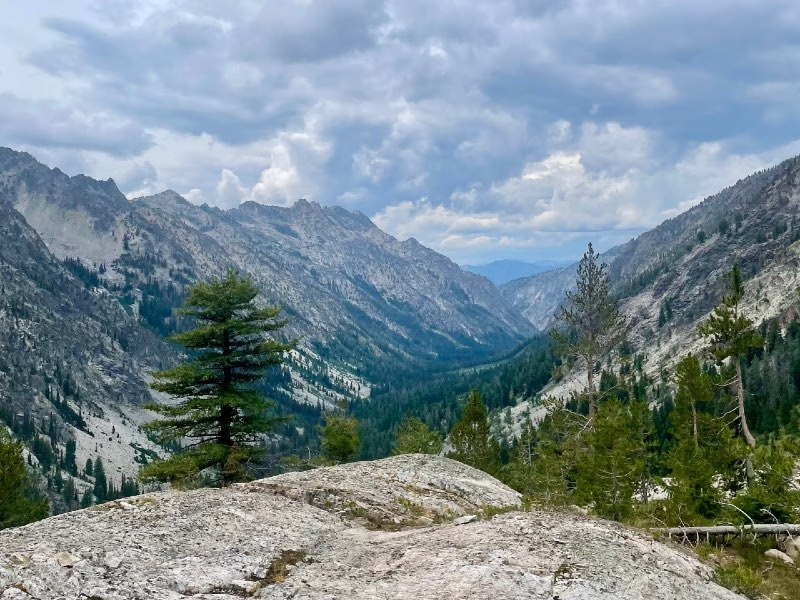
The Sawtooth Mountains are full of spectacular scenes.
They were friendly, happy to chat — until they learned that I came from somewhere else (and somewhere not even that far away, relatively speaking).
Their tone, while still congenial, was a touch more hostile. They claimed these were their mountains, that they used to be empty of people, and that over the last decade they had seen more and more people from out of state. This displeased them. They insinuated that I didn’t belong, and that I, and all of the other visitors, were a problem. We were ruining this place, “their” place.
That interaction stuck with me because that’s not the outdoor culture I want, nor the one that I think is best for society or conservation. If we’re talking about public land, these aren’t their mountains because they happen to live closer to them. They aren’t their mountains because their family has been hiking there longer than mine. They’re places we all have the opportunity to experience, provided we follow the rules and treat them with respect. One person on my TikTok video added further context with a comment saying, “As an Indigenous person, this is the ultimate level of colonizer behavior.”
I’m from Oregon. Oregon has some magnificent mountains of its own. If I see somebody from Idaho at a trailhead here, I’m not wondering what they’re doing in my mountains; they are our mountains — all of us. I hope they have a great hike. That’s what I told that couple. I told them to come visit our beautiful volcanic mountains, and that I would be happy to introduce them to some great trails to explore. But they remained silent. I continued on with my hike while they remained creekside.
Gatekeeping Is the Lazy Version of Conservation
This is where the gatekeeping argument really starts to fall apart for me. Telling somebody “don’t come here” takes almost no effort. Teaching somebody how to visit responsibly takes more.
If you actually care about protecting a place, you can explain where people should camp, why they shouldn’t cut switchbacks, when seasonal closures are in effect, or what Leave No Trace looks like in that particular environment. You can tell backpackers whether food storage is an issue, explain why dogs need to be leashed in a certain area, or let somebody know that the beautiful meadow they’re eyeing for a tent site is exactly where they shouldn’t camp.
That information is useful. “Stay away” isn’t.
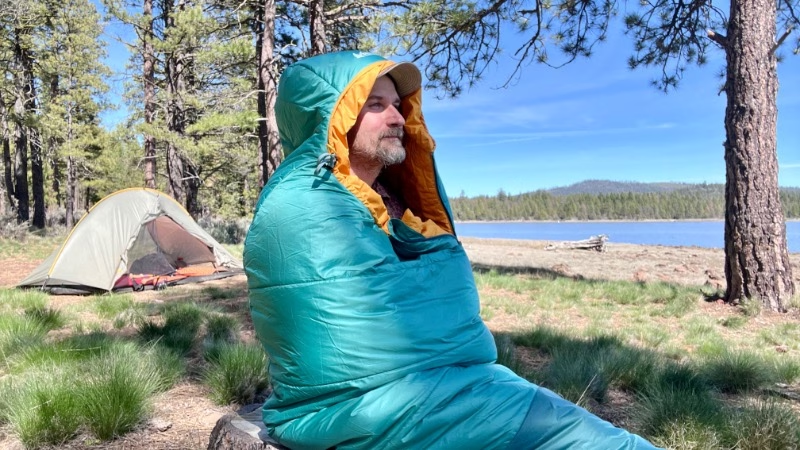
One of my favorite places to summer camp is Oregon’s Thompson Reservoir. Few people seem to know it exists.
I’d also argue that welcoming new hikers and giving them good information can create more people who care about protecting these places. Someone who visits a wild place, learns about it, and has an incredible experience there now has a reason to care what happens to it. Maybe they become more serious about Leave No Trace. Maybe they donate to a trail organization, volunteer for a cleanup, support public-land funding, or teach their own kids how to behave outside.
You don’t build that kind of connection by keeping people out.
Yes, More Visitors Can Create Problems, But
I don’t want to pretend there isn’t a legitimate conservation argument buried underneath some of the gatekeeping. Popular outdoor destinations can absolutely get hammered.
Trails erode, parking lots overflow, campsites spread, human waste becomes a problem, wildlife gets disturbed, and people leave trash behind. Anyone who spends enough time hiking has seen some version of this, and pretending otherwise doesn’t help anybody.
But increased use calls for better management and better education. Depending on the location, that might mean permits, designated campsites, toilets, seasonal closures, shuttle systems, more trail maintenance, clearer signage, or limits on certain activities. Those are actual tools for managing recreation pressure.
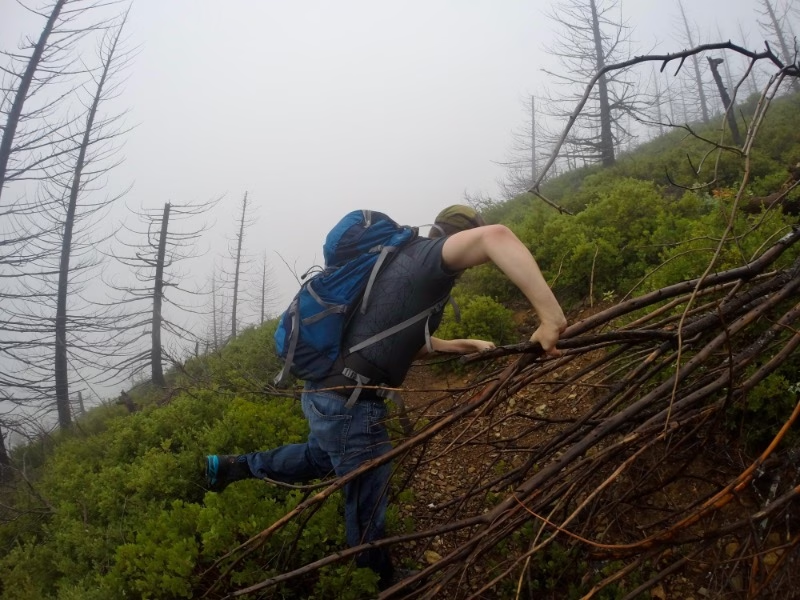
Mt. Bolivar is a rarely visited peak in Oregon’s Coast Range. It’s technically the tallest, but Mary’s Peak gets more attention and visitors.
There are also times when withholding location information makes sense. I don’t think anybody needs to broadcast the exact coordinates of a sensitive archaeological site, wildlife den, or fragile off-trail location to a million strangers on Instagram. If a managing agency specifically asks visitors not to publicize somewhere, listen to them.
That’s not what I mean when I talk about outdoor gatekeeping. I’m talking about established trails, recreation areas, public campgrounds, mountain ranges, lakes, parks, and other places that are already intended for people to visit. Keeping the name secret because you personally preferred the trail when fewer people knew about it isn’t much of a conservation strategy.
Teach People How to Be Good Visitors
This was really the point I was trying to make in the second video. Instead of spending all that energy resenting visitors, help them become better visitors.
Tell somebody where the actual trail is so they don’t wander off and stomp through vegetation. Explain the local history. Point them toward appropriate campsites. Tell them how to dispose of waste, what the wildlife concerns are, and which regulations somebody coming from another state might genuinely have no reason to know.
More importantly, explain why you care about the place.
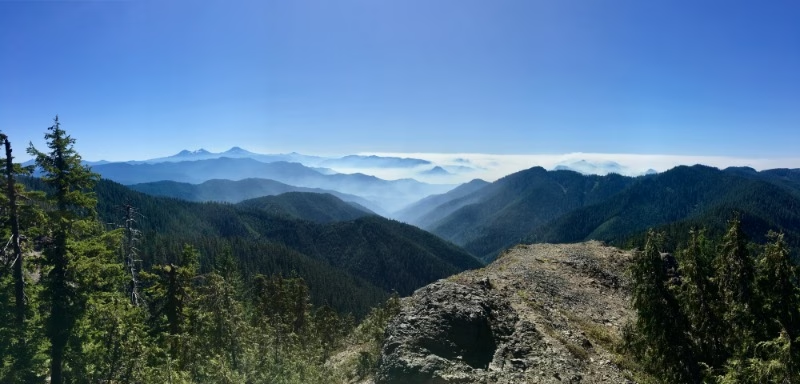
Tidbits Mountains is a local favorite of mine. It has an old fire lookout platform where you can chill above the forest with views like this.
People are much more likely to protect something once they feel connected to it. A person who has never stood on a mountain ridge at sunset has a more abstract relationship with wilderness than somebody who has actually been there. A kid who spends a week backpacking may grow into an adult who cares deeply about trail access and conservation. Someone visiting a national forest for the first time might discover an entirely new reason to support keeping public lands wild.
Outdoor recreation creates conservationists too, and we should want more of them.
Being Local Doesn’t Make Public Land Your Backyard
There’s also something about the word “local” in these conversations that has always rubbed me the wrong way.
Local knowledge matters. People who live somewhere usually know the trails, weather, seasonal changes, access issues, and history better than visitors do, and that knowledge can be incredibly useful. But knowledge and ownership are not the same thing.
Moving to a beautiful mountain town doesn’t give you first dibs on the surrounding public land, and neither does being born there. If a place is open to the public, then visitors have just as much right to be there as locals do, assuming everyone follows the same rules.
There’s also a practical contradiction here. A lot of recreation-oriented communities depend heavily on people coming from somewhere else to hike, ski, bike, climb, camp, stay in hotels, eat at restaurants, buy groceries, and rent equipment. Wanting all of that economic activity while also complaining that visitors are showing up is a pretty awkward position to hold.
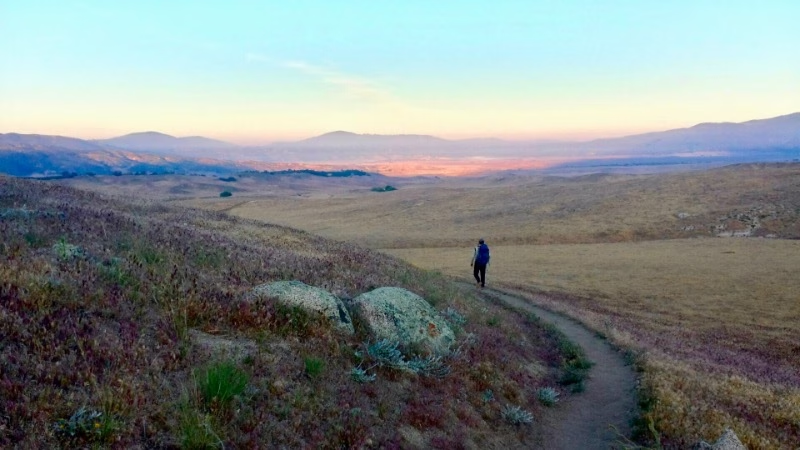
Outside of Eagle Rock in California, just further down the trail than most people go.
The Outdoors Needs More Teachers, Not More Gatekeepers
I understand the instinct behind gatekeeping. You find somewhere beautiful, maybe you’ve been going there for 20 years, and then more people discover it. Then, the parking lot gets busier and that campsite you used to have to yourself is occupied more often. Something that once felt like your secret no longer does. Part of you wants to pull the ladder up behind you.
But somebody probably helped you discover the outdoors too. Maybe your parents took you camping. Maybe a friend showed you your first backpacking trail. Maybe you bought a guidebook, stumbled across a website, or learned from somebody who had more experience than you did.
None of us arrived knowing all of this stuff.
So when someone new shows up, teach them. Tell them why you pack out your trash. Show them how to camp without expanding a site. Explain why wandering off trail can matter in fragile environments. Tell them about the wildlife, the history, and the local rules. Help them understand what makes the place special, then send them out to experience it for themselves.
The goal shouldn’t be to turn wild places into private playgrounds for the people who got there first. It should be to keep them wild, spectacular, and accessible for the next person who falls in love with them too.
Sorry, I’m going to keep this location private.
FAQ: Outdoor Gatekeeping
What does gatekeeping mean in hiking and outdoor recreation?
Outdoor gatekeeping is the practice of withholding information or discouraging other people from visiting outdoor destinations because someone believes the place should remain limited to locals, experienced users, or people who already know about it. It’s different from protecting genuinely sensitive locations or following restrictions established by land managers.
Is it wrong to keep a hiking location secret?
Not necessarily. Avoiding publicity can make sense for fragile ecosystems, archaeological and cultural sites, wildlife habitat, unofficial routes, or places that managing agencies specifically ask visitors not to publicize. The important distinction is whether there’s a legitimate stewardship reason for withholding information or simply a desire to keep other people away.
Does social media damage hiking destinations?
It can contribute to sudden increases in visitation, and poorly managed visitation can create real problems. But the underlying issue is usually visitor behavior and management capacity, not simply the fact that more people know a place exists. Sharing responsible-use information alongside destination content is a much more useful response than assuming secrecy will solve everything.
How can hikers help protect popular trails?
Follow local regulations, stay on established trails where required, use durable campsites, dispose of waste properly, respect wildlife and seasonal closures, follow appropriate food-storage rules, and practice Leave No Trace principles. Supporting trail organizations and land-management programs can help too.
Should outdoor creators geotag every location?
No. Context matters. Established public trails and recreation areas are different from sensitive wildlife locations, archaeological sites, fragile off-trail destinations, or places where land managers specifically discourage publicity. Responsible outdoor content should consider the potential consequences before sharing precise location information.
Can welcoming more people into the outdoors actually help conservation?
Yes. Firsthand outdoor experiences give people a personal reason to care about trails, wildlife, public access, and wild landscapes. The better approach is to pair access with education so new visitors understand both how to enjoy these places and how to help protect them.