






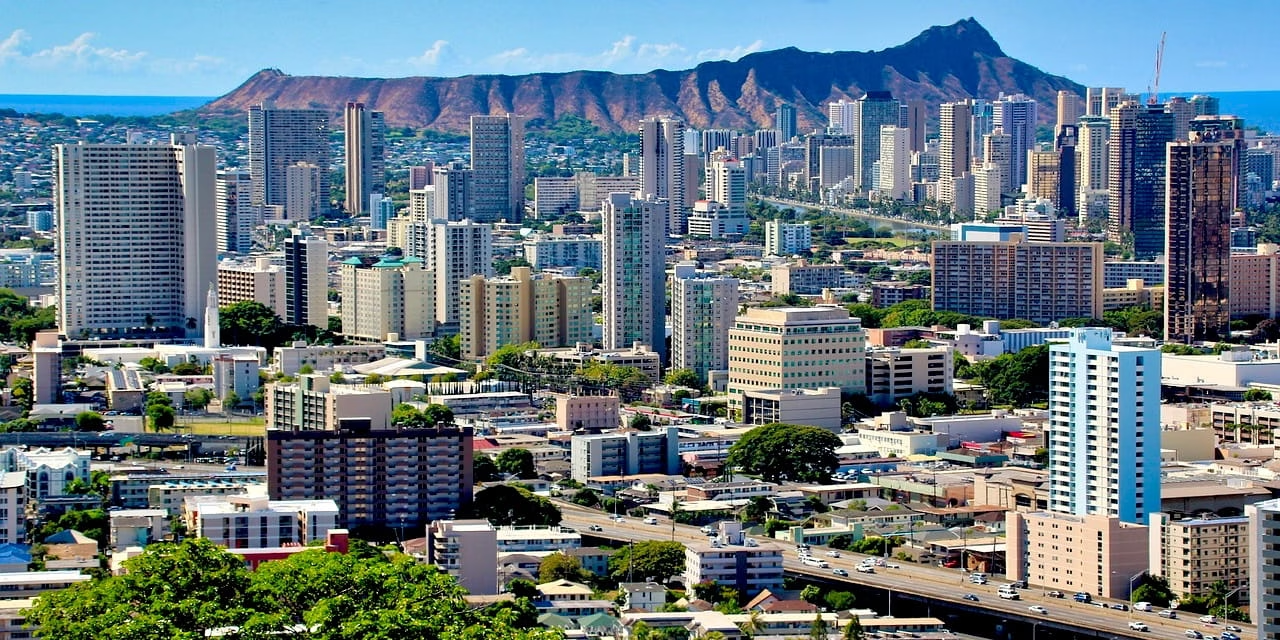
Honolulu can be deceptive on a map. Waikīkī, Kakaʻako, Chinatown, downtown Honolulu, and Kaimukī all look close enough that you might imagine stitching them together into one long city walk.
Technically, you could. In practice, the midday sun and a few wide arterial roads may cause you to reconsider your ambitions.
The better way to explore Honolulu on foot is to treat it as a collection of walkable pockets. Choose a neighborhood, follow its most interesting street, and wander onto the side streets when something catches your attention. There is usually a bakery, mural, beach access point, or plate lunch involved.
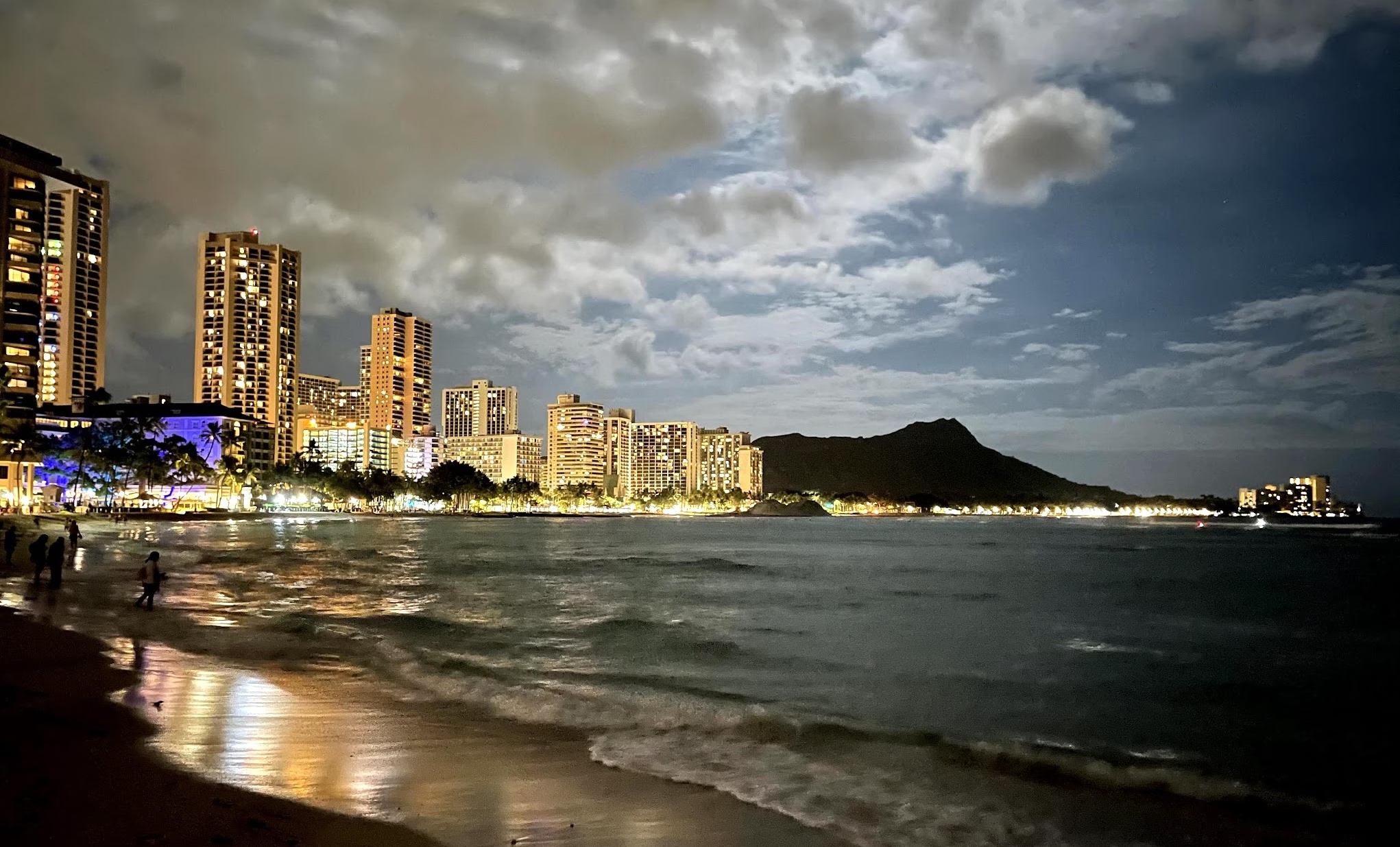
Walking Waikiki at night is an experience all its own. Photo: Arthur McMahon
Waikīkī is the easiest place to begin. The City and County of Honolulu identifies it as one of Oʻahu’s most walkable neighborhoods, although even here pedestrians share space with busy traffic and intersections designed partly around cars. Outside Waikīkī, the best walking streets become more spread out, but public transportation and short rides can connect the major neighborhoods.
This is not a strict ranking from first to tenth. Each street offers a different kind of Honolulu walk, from beachfront people-watching to neighborhood food crawls and short walks through the city’s historic core.
1. Kalākaua Avenue
Best stretch: From the western end of Waikīkī through central Waikīkī and on toward Kapiʻolani Park
Kalākaua Avenue is the obvious choice. Obvious is not always bad.
This is the Waikīkī most visitors picture before they arrive: palm trees, surfboards, open-air restaurants, hotel entrances, luxury stores, and occasional flashes of blue water between the buildings. The main stretch runs parallel to Waikīkī Beach, making it easy to step off the sidewalk and walk along the sand whenever the storefront crowds become a little much. I walk this road every time I visit Waikiki.
Kalākaua is not peaceful. At times, it feels like every visitor on Oʻahu has independently decided to stand in front of the same crosswalk. But it is energetic, easy to navigate, and packed with places to stop. The Royal Hawaiian Center, International Market Place, beachfront resorts, and numerous restaurants are all located along or just off the avenue.
Continue east, and the commercial side of Waikīkī gradually loosens its grip. Kalākaua reaches the Honolulu Zoo at Kapahulu Avenue and then follows the edge of Kapiʻolani Park, where the sidewalks feel calmer, and Diamond Head starts taking up more of the view. The zoo sits directly at the corner of Kalākaua and Kapahulu, making it an easy turnaround point or family stop.
Walk this street in the morning for cooler temperatures or return around sunset when the beachfront side of the avenue comes alive.
2. Kūhiō Avenue
Best stretch: From Launiu Street through central Waikīkī to Kapahulu Avenue
Kūhiō Avenue runs roughly parallel to Kalākaua but sits one block farther inland. It is less scenic and considerably more practical.
This is where you will find bus stops, casual restaurants, coffee shops, convenience stores, smaller hotels, and the everyday infrastructure that keeps Waikīkī functioning. Kalākaua is for wandering with no particular goal. Kūhiō is where you walk when you need breakfast, sunscreen, or something that does not cost resort-lobby prices.
Honolulu’s Waikīkī design guidelines identify Kūhiō as one of the neighborhood’s primary pedestrian-oriented streets. It can still be noisy and heavily trafficked, but the steady run of businesses gives you plenty of reasons to keep walking.
I have stayed at the Waikiki Banyan a couple of times, and its location near Kūhiō Avenue works particularly well for a walking-heavy trip. The property is at the eastern end of Waikīkī, about a block from the beach, with condo-style units that include full kitchens and separate living areas. Individual units vary because many are privately managed, but having a kitchen and actual living space is useful when wet beach gear begins colonizing the room.
Travelers looking for more space than a standard hotel room can compare Waikiki Banyan vacation rentals, VRBO rentals in Waikiki, and other Waikiki condo rentals before booking.
3. Lewers Street
Best stretch: Between Kūhiō Avenue, Kalākaua Avenue, and Kalia Road
Lewers Street is short, but it packs a lot into a few blocks.
The street cuts through the western side of central Waikīkī and provides access to Waikiki Beach Walk, a compact shopping, dining, and entertainment district between Kalākaua Avenue and Kalia Road. The area mixes restaurants and familiar stores with a smaller collection of locally based shops.
Lewers works especially well in the evening. You can start near Kūhiō, walk toward the beach, stop for dinner or a drink, and then join Kalākaua for a longer sunset stroll. It feels active without requiring the full commitment of walking central Kalākaua at its busiest.
This is also one of the most convenient areas for visitors comparing hotels in Waikiki. Halepuna Waikiki by Halekulani sits near Lewers and is one of the area’s better-reviewed hotel options, with a 9.1 guest rating from more than 3,000 reviews on Booking.com at the time of writing.
Lewers will not fill an entire afternoon by itself. Think of it as a connector—a pleasant, concentrated street that ties together Kūhiō Avenue, Kalākaua Avenue, Waikīkī Beach, and several of the neighborhood’s main hotel and restaurant areas.
4. Monsarrat Avenue
Best stretch: From the Honolulu Zoo and Kapiʻolani Park toward Campbell Avenue
Monsarrat Avenue offers one of the easiest transitions from resort-heavy Waikīkī into a more residential side of Honolulu.
Begin near the Honolulu Zoo and the eastern end of Kapiʻolani Park. From there, Monsarrat heads toward Diamond Head through a neighborhood of small restaurants, cafés, local businesses, apartment buildings, and older homes. The setting becomes quieter within a few blocks, although you are still close enough to Waikīkī to walk back to your hotel.
This is one of my favorite kinds of urban travel walk. There is no single massive attraction demanding your attention. Instead, the street gradually changes around you. Hotels disappear. The sidewalks become less crowded. Diamond Head keeps peeking over rooftops as if it is checking whether you are actually going to hike it.
Monsarrat also borders the zoo and park area, with one Honolulu Zoo entrance used for certain events located along the avenue.
You can combine Monsarrat Avenue with a walk through Kapiʻolani Park or continue toward Diamond Head Road. Travelers planning to hike the crater should check current reservations and entry requirements separately rather than assuming they can simply wander through the gate.
5. Kapahulu Avenue
Best stretch: From Kalākaua Avenue to Date Street
Kapahulu Avenue begins beside the Honolulu Zoo and runs inland from Waikīkī. It is one of the city’s better food streets, with restaurants, bakeries, takeout counters, and small local businesses scattered along the corridor.
The walking experience is more functional than polished. Traffic can be loud, some blocks offer less shade than you would like, and the street occasionally reminds you that a road can be walkable without being especially relaxing.
Still, Kapahulu rewards curiosity. It is a good place to try a casual local meal, pick up something sweet, or simply see what Honolulu looks like beyond the landscaped grounds of Waikīkī’s resorts. The best meal I’ve had on Oahu was at Tonkatsu Tamafuji on Kapahulu Ave.—you’ll have to get there early, like as soon as the restaurant opens, or you’ll be waiting a long time before you get your dinner. The only time I was seated quickly was when I was a solo diner.
For a manageable route, begin near the zoo, walk inland to Date Street, and then decide whether to turn around or continue toward Waiʻalae Avenue. The lower section is easy to pair with Kalākaua Avenue, Monsarrat Avenue, or a morning in Kapiʻolani Park.
Go hungry. Eat to your heart’s content.
6. Auahi Street
Best stretch: From SALT at Our Kakaʻako toward Ward Village
Auahi Street provides the clearest walking route through modern Kakaʻako.
Start around SALT at Our Kakaʻako, near the intersection of Auahi and Keawe streets. SALT anchors a nine-block area centered around Auahi, Keawe, and Coral streets, with restaurants, cafés, shops, creative businesses, and public gathering spaces.
From there, walk east toward Ward Village. You will pass newer residential towers, small parks, restaurants, retail spaces, and side streets where remnants of Kakaʻako’s warehouse character still show through. Large murals are scattered around the broader neighborhood, so this is one street where a few unplanned detours are part of the point.
Auahi is flatter, wider, and generally easier to follow than many of Honolulu’s older commercial streets. Parts of it feel very new—because they are. Kakaʻako sometimes gives the impression that the neighborhood is being assembled while you walk through it.
That contrast is what makes the route interesting. One block feels industrial. The next has a polished café beneath a glass residential tower. Keep heading east, and Auahi connects with the shops and restaurants around South Shore Market and Ward Village.
Visitors can also look for a Kakaʻako street-art tour, Honolulu food tour, or other things to do in Kakaʻako if they want more context than a self-guided walk provides.
7. Hotel Street
Best stretch: Through Chinatown and into downtown Honolulu
Hotel Street is one of the most interesting urban walks in Honolulu, although it presents a very different version of the city than Waikīkī.
The street passes through Chinatown, where markets, lei shops, restaurants, galleries, older commercial buildings, and small storefronts sit within a relatively compact area. I enjoyed the best chirashi bowl I’ve ever had in the back of a fish market in this area—I recommend you explore the nooks and crannies on your own.
Hotel Street is also a major transit corridor, so buses are part of the scenery. The sidewalks can feel busy and a little rough around the edges, but that is part of what makes the area feel like an actual city neighborhood rather than an outdoor resort concourse.
I prefer walking Hotel Street during the day, when markets and local businesses are active. Start near the Chinatown markets and continue east toward downtown. Along the way, explore the pedestrian areas and side streets around Kekaulike Street, Smith Street, and Nuʻuanu Avenue.
A guided Honolulu Chinatown walking tour can be worthwhile for travelers interested in the neighborhood’s immigrant history, architecture, food, and arts scene.
8. Nuʻuanu Avenue
Best stretch: Between North King Street and South Beretania Street
Nuʻuanu Avenue crosses Hotel Street and provides a natural north-south route through Chinatown.
The most interesting section sits between the busier commercial streets near the waterfront and the galleries, restaurants, bars, and historic buildings farther inland. Nuʻuanu is less market-focused than some nearby blocks, and parts of it have become closely associated with the Chinatown Arts District.
This is a street to walk slowly. Look into courtyards. Notice the older façades above newer businesses. Turn onto Hotel Street when the storefronts catch your attention, then return to Nuʻuanu when you are ready to continue.
Honolulu’s Chinatown covers a relatively small area but contains a dense mix of cultural institutions, restaurants, galleries, shops, and historic architecture, which makes Nuʻuanu and the surrounding cross streets easy to explore together.
For a longer route, combine Nuʻuanu Avenue with Hotel Street and Merchant Street. Together, the three provide a much fuller picture of downtown Honolulu than you will get by driving through on the way back to Waikīkī.
9. Merchant Street
Best stretch: The three-block historic district in downtown Honolulu
Merchant Street is the shortest walk on this list. It may also be the most architecturally interesting.
The Merchant Street Commercial and Civic Historic District covers roughly three blocks near Honolulu Harbor. It contains buildings representing different periods of the city’s commercial development, with a scale that feels noticeably smaller than the modern office towers surrounding it.
This is more of an architectural walk than a shopping or dining street. You can see much of it fairly quickly, but it works well as part of a larger downtown route that includes Hotel Street, Nuʻuanu Avenue, ʻIolani Palace, and the Hawaiʻi State Capitol area.
Merchant Street also gives you a sense of how Honolulu developed around its harbor. The district’s early roads connected inland areas with shipping and commercial activity along the waterfront.
Do not make a special cross-island journey for Merchant Street alone. Add it to a Chinatown or downtown Honolulu walking itinerary, and it becomes one of the most distinctive sections.
10. Waiʻalae Avenue
Best stretch: Around 8th Avenue through 13th Avenue in Kaimukī
Waiʻalae Avenue is the main commercial spine of Kaimukī, a hillside neighborhood east of Waikīkī and Diamond Head.
The best walking section contains an assortment of restaurants, bakeries, coffee shops, small retailers, and long-running neighborhood businesses. Hawaiʻi’s tourism authority describes Kaimukī as a neighborhood where older mom-and-pop establishments sit alongside newer restaurants and confectioneries.
Waiʻalae feels refreshingly removed from the resort district. There are fewer souvenir stores, fewer people carrying beach towels, and considerably less chance that someone will try to sell you a sunset cruise while you are buying coffee.
It is not perfect pedestrian territory. The street slopes, traffic is steady, and shade can be inconsistent. The commercial density also thins out beyond the central section, so it helps to know which blocks you want to explore.
Come for a meal and build your walk around it. Kaimukī is better experienced as a neighborhood outing than a box to check between attractions.
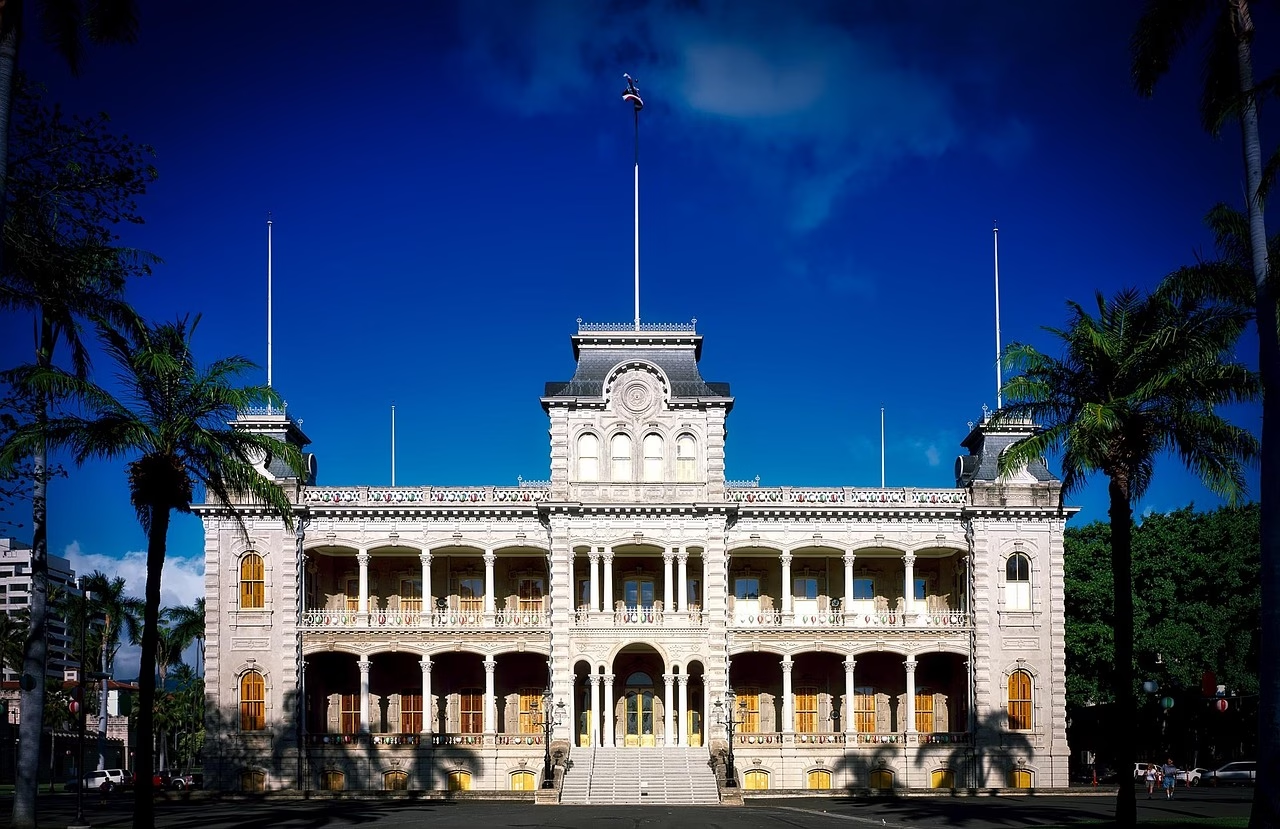
Iolani Palace is a beautiful destination to walk to in downtown Honolulu.
Where to Stay for a Walkable Honolulu Trip
For most first-time visitors, hotels in Waikiki provide the easiest base for exploring Honolulu without driving every day. Kalākaua Avenue, Kūhiō Avenue, Lewers Street, the beach, Kapiʻolani Park, and the beginning of both Monsarrat and Kapahulu avenues are all within walking distance of central or eastern Waikīkī.
The Waikiki Banyan is a practical choice for travelers who prefer a condo-style setup. I have stayed there twice at different Airbnb rentals and particularly like the location near the eastern end of Waikīkī. It is close to Kūhiō Beach, the Honolulu Zoo, Kapiʻolani Park, and the starting points for several walks on this list. Its full kitchens also make it easier to avoid paying Waikīkī restaurant prices for every single meal.
Because units differ, compare photographs, recent reviews, air-conditioning details, parking terms, and management companies when looking at Waikiki Banyan vacation rentals or VRBOs in Waikiki. The building itself may be consistent. The furniture inside the privately managed condo can apparently come from any decade it pleases.
Travelers looking for a more traditional upscale hotel can consider Halepuna Waikiki by Halekulani, which is well placed for Lewers Street and central Kalākaua.
Prince Waikiki is another highly rated option, particularly for visitors who want easier access to Ala Moana and Kakaʻako while remaining within walking distance of western Waikīkī. It currently carries a 9.0 Booking.com rating from roughly 1,470 reviews, while the hotel’s own site reports similarly strong ratings across several booking platforms.
How to Connect Honolulu’s Walkable Neighborhoods
Do not try to link all 10 streets into one continuous walk unless you enjoy long stretches of hot pavement for their own sake.
A better plan is to group them:
- Walk Kalākaua, Kūhiō, and Lewers together while staying in Waikīkī.
- Combine Monsarrat and lower Kapahulu with Kapiʻolani Park.
- Explore Auahi Street during a separate Kakaʻako outing.
- Walk Hotel Street, Nuʻuanu Avenue, and Merchant Street as one Chinatown and downtown route.
- Visit Waiʻalae Avenue when you are already heading to Kaimukī for breakfast, lunch, or dinner.
- Public buses, rideshares, taxis, and organized Honolulu tours can cover the gaps.
Travelers booking flights to Honolulu can also compare an Honolulu airport transfer, airport shuttle, or rideshare rather than automatically reserving a car for every day of the trip.
A car rental in Honolulu is still useful for exploring other parts of Oʻahu, including the North Shore and more distant trailheads. For the streets in this guide, however, leaving the car parked may be the more relaxing option.
Now You Know Where to Walk in Honolulu
Be prepared when venturing out in the streets of Honolulu. The city can get hot and humid, the traffic is loud, and its most enjoyable walking areas are concentrated into distinct neighborhoods rather than connected by one enormous pedestrian-friendly grid.
Those pockets are worth seeking out.
Walk Kalākaua for the classic Waikīkī experience. Follow Kūhiō when you need something practical. Leave the resort zone on Monsarrat or Kapahulu, explore the changing cityscape along Auahi, and give yourself time to wander through Chinatown, downtown, and Kaimukī.
The best walks in Honolulu are rarely about covering the most distance. They are about choosing the right few blocks—and knowing when to stop for something cold and refreshing.
Want to step off the pavement and onto some dirt? See our article on the 3 Best Hikes on Oahu, Hawaii.


